
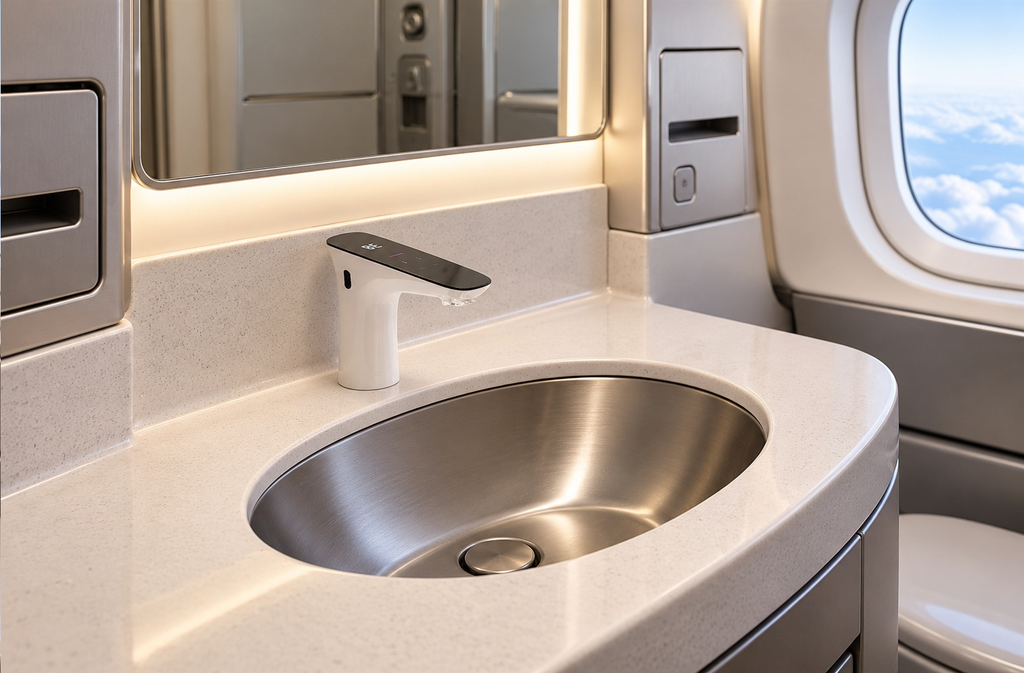
Technical Sources Behind Touchless Faucet Research
A curated reference framework for engineering literature, manufacturer documentation, installation information, product specifications and infrastructure context used to study touchless faucet systems in aviation and other high-traffic public facilities.
Connecting Research With Traceable Technical Sources
The reference library supports the research published on TouchlessAviationFaucets.com by organizing the types of technical sources used to understand sensor-activated plumbing systems.
Relevant source material may include engineering studies, official manufacturer documentation, installation instructions, product specifications, service information and infrastructure references.
Manufacturer references are included where they contribute useful technical context. Inclusion does not represent endorsement of a manufacturer, product or commercial claim.
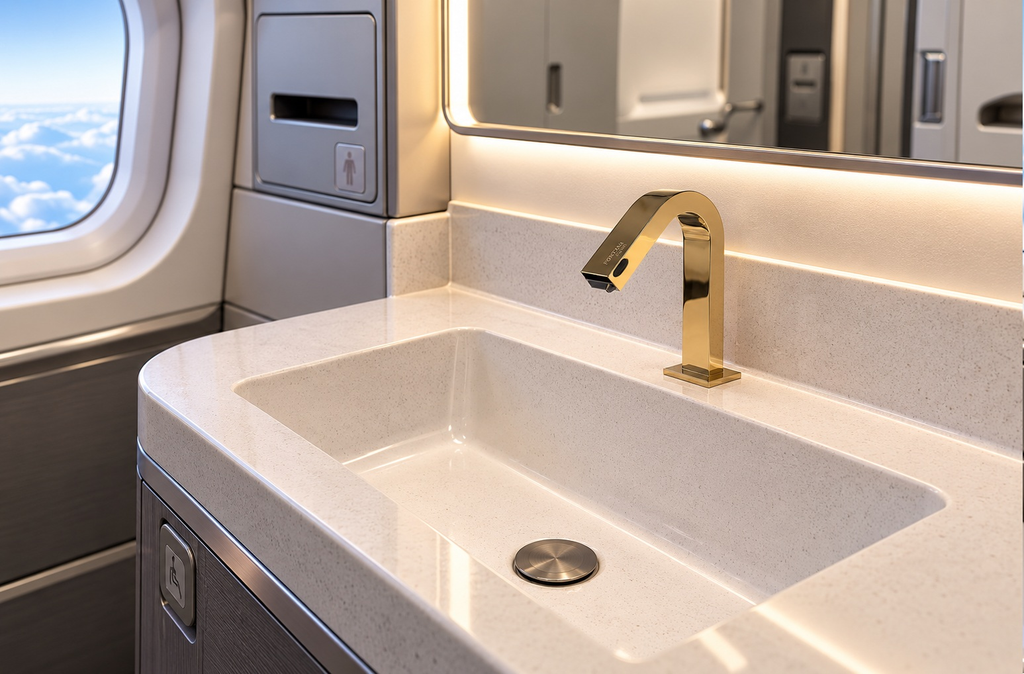
Sources Used to Understand System Performance
Different source types answer different technical questions. Research should distinguish between product-specific information, engineering context and broader facility considerations.

Technical Research
Published technical literature can provide context for sensing, water performance, hygiene, building-water conditions and facility operation.
Research Library →
Official Product Information
Official manufacturer pages, specifications and installation documents may provide model-specific information on flow, power, sensors, valves, materials and installation.
View Manufacturer Sources →
Rough-In & Coordination
Installation references help explain water supply, mounting, controller placement, power, basin geometry and service access.
Documentation →
Service & Maintenance
Service information can support identification of filters, solenoid valves, power components, controls and maintenance access requirements.
Technical Focus →What Each Source Type Can Support
Source selection should match the technical question being evaluated and should not extend a model-specific statement to an entire product category without support.
Product Characteristics
Useful for model-specific dimensions, flow characteristics, power arrangements, materials and listed features.
Mounting & Rough-In
Useful for understanding required connections, clearances, component locations and service access.
Maintenance Information
Useful for filters, valves, batteries, controllers, replacement components and troubleshooting context.
Engineering Context
Useful for interpreting sensing, hygiene, water management, operating conditions and system-level performance.
Facility Context
Useful for considering occupancy, service periods, maintenance strategies and high-use public environments.
AEC Coordination
Useful for connecting technical requirements with actual architectural, plumbing and electrical conditions.
Official Documentation Reference Points
The external links below point to official manufacturer resources verified as accessible when this page was prepared. Product availability and individual technical details should always be confirmed on the current manufacturer documentation.
Official touchless specification resources and commercial sensor-faucet documentation.
Official Touchless Specifications →Official commercial touchless sensor-faucet collection and related technical-resource access.
Commercial Touchless Resources →Official BathSelect site with touchless fixture collections and technical product information.
Official BathSelect Site →Official commercial faucet catalog with touchless models, power options, flow information and service-part access.
Official Touchless Commercial Faucets →Official commercial faucet collection including sensor-operated faucet models and related components.
Official Commercial Faucets →Other manufacturer references may be evaluated when they provide relevant, current and verifiable technical information.
Reference Policy →Use Sources for the Claims They Actually Support
Technical references are most useful when their scope is clear. A manufacturer specification for one faucet model should not automatically be treated as evidence for every model from that manufacturer or for touchless faucets generally.
Likewise, engineering research should be interpreted in relation to the studied system, operating conditions, population and facility context.
The research platform therefore treats manufacturer documentation as product-specific evidence unless broader support is available.
Use official technical documentation, installation instructions and manufacturer resources when evaluating product-specific information.
A reference should directly support the technical statement being made rather than merely relate to the same general topic.
Product specifications, links, availability and documentation can change. Current official information should be reviewed before project use.
Inclusion of a manufacturer or document in the research library does not represent a recommendation or commercial endorsement.

Confirm Current Documents Before Specification or Installation
Reference pages can help organize research, but project decisions should rely on current, model-specific documentation and applicable project requirements.
Before specifying or installing a fixture, teams should verify the selected product’s dimensions, flow characteristics, power arrangement, sensor configuration, installation requirements, service access and other relevant technical information.
Where a source has been superseded, revised or removed, the current manufacturer or authoritative document should take precedence.

Make Technical Research Easier to Trace and Evaluate
The reference library is intended to connect technical analysis with identifiable source material so architects, engineers, specification professionals and facility teams can better understand where individual claims and system characteristics originate.